
 0:15 · English
WATCH. UNDERSTAND. TRY IT.
Split the bill and take your digital receipt
Split the bill together, keep a private receipt and add business hospitality details.
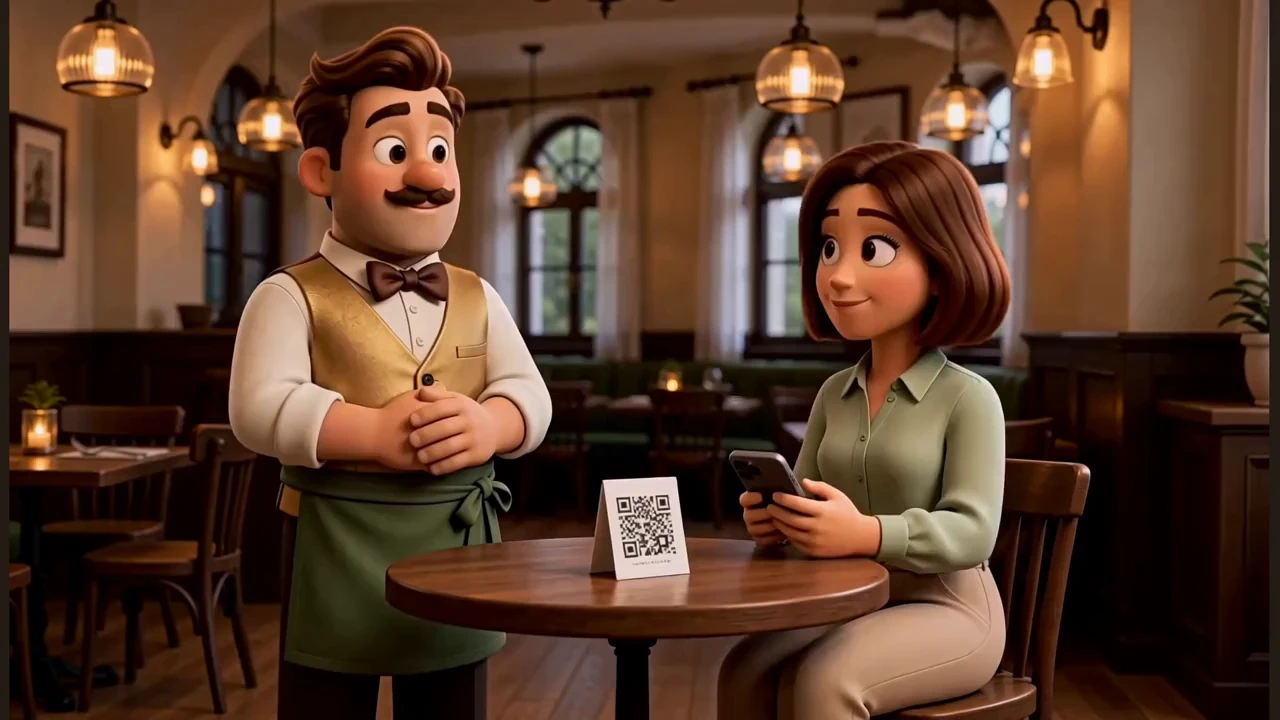
Animated illustration with fictional data and device screens. Payments and receipts shown are for testing; these receipts are not valid tax documents. Live payments, email delivery and country-specific receipt setup each require separate activation and acceptance.
Read the transcript
Before leaving, Anna opens her table round's bill. For payment at the end, one person can pay everything, each guest can pay for their own dishes, the group can split equally, or assign individual items. The guests agree on the split before anyone makes the first payment. Once checkout begins, this agreed distribution is locked. Orders already paid for immediately are neither split nor charged again. Toni sees what is outstanding and which payment is in progress. Billing is complete only when every share is paid. The business can configure optional tips to suit its service. Our pilot shows clearly labelled test payments only. Guests open their personal receipt through a private QR code. They can save a PDF or receive it by email if email delivery is configured. Without a mail service, an email is prepared for them to send themselves. For business hospitality, Anna adds the host, place, date and occasion. She can import names from the order, edit them and add more later. She draws her signature on her phone. The resulting PDF contains both the original receipt and the confirmed business hospitality details. Later corrections remain traceable as new versions. Pilot receipts are test documents with no legal validity; real invoices require the appropriate payment and country approval.
Related films


Animated examples with fictional data. Payments and receipts are tests. Direct waiter calls on a watch are a planned workflow; the current watch apps handle ready orders and powerbank tasks. Real payments, country-specific receipts, provider connections and device tests require separate approval.